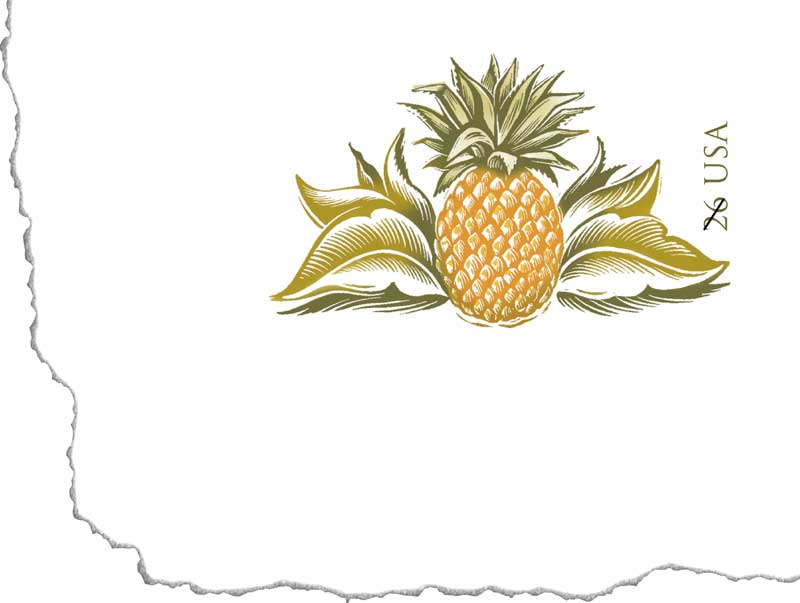
Today is Earth Day, a day to slow down and appreciate the beauty around us. Established in the U.S. in 1970, Earth Day is now the largest civic event in the world, with families, schools, and communities around the globe coming together to reflect on the environment, the planet, and what we can do to keep them healthy for future generations.
The U.S. Postal Service is proud of its long tradition of celebrating the natural world. From wildlife Forever® stamps to seeded postcards, and everything in between, we’ve got just the right thing to help you make every day Earth Day.

Spicebush Swallowtail

Vintage Seed Packets

Lady Bird Johnson

New Mexico Statehood

Bank Swallow
1. The spicebush swallowtail is one of the most beautiful and intriguing of the swallowtail butterflies. This stamp may be used for square envelopes weighing up to and including one ounce. 2. The ten feature photographs of antique seed packets (printed between 1910 to 1920), cropped to highlight their beautiful floral detail. The stamps are available separately or as part of this . 3. The commemorates the centennial of Mrs. Johnson’s birth and honors her legacy of preserving and beautifying America. The sheet features six stamps, five of which were originally issued in the 1960s. 4. The New Mexico Statehood stamp showcases the peaks of Cerro de Santa Clara and Cerro de Guadalupe in northern New Mexico. 5. Earlier this year, USPS issued a stamped envelope featuring the bank swallow, the smallest swallow in North America.

The Grandest Things

Kelp Forest

Save Vanishing Species

Sunflower

Scenic American Landscapes
1. (116 pages) uses breathtaking images and historic stamps to explore how our national park system began. 2. This features ten 44-cent postal cards. 3. A portion of the proceeds from sales of the Save Vanishing Species™ First-Class Semipostal stamp (which features an Amur tiger cub) benefits conservation funds that are helping create hope for the future. The includes ten cards, ten envelopes, and ten semipostal stamps. 4. The 42-cent is now on sale! (Please note that extra postage is required.) 5. Share the pristine beauty of America’s natural wonders with the stamped cards: and . Each set of 20 cards features ten spectacular landscapes (two cards of each image) based on previously released postage stamps. Postage is pre-printed on the cards.

Lancaster County
Apples

Birds of Prey

Hawaiian Rain Forest

Go Green
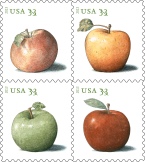
1. The Lancaster County, Pennsylvania, stamp captures the beauty of the rural landscape as an Amish buggy travels along a country road, passing one of the region’s iconic farms. 2. The four Apples postcard stamps showcase some of America’s favorite varieties. (Can you name then all?) 3. Birds of prey, also known as raptors, thrive in diverse habitats and live on every continent except Antarctica. The 85-cent Birds of Prey stamps salute five kings of the sky: the northern goshawk, peregrine falcon, golden eagle, osprey, and northern harrier. 4. This set of ten 44-cent depicts 24(!) different species. (Additional postage is required for First-Class mail rate.) 5. The illustrate simple things we each can do every day to save the environment, while the are an exciting and eco-friendly way to keep in touch and share the go green message.

Louisiana Statehood

Cherry Blossom Centennial

Purple Martin

Glacier National Park

Global International
1. The Louisiana Statehood stamp features a photograph of Flat Lake, which is located in the Atchafalaya Basin, the largest contiguous river swamp in the U.S. Its bayous are home to alligators, crawfish, snakes, turtles, nutria, owls, and eagles. 2. The panoramic Cherry Blossom Centennial stamps commemorates Tokyo’s gift of cherry blossom trees to the city of Washington D.C. as a sign of growing friendship between Japan and the U.S. The matching set of includes eight cards (four different designs) and envelopes, and eight stamps. 3. The Purple Martin Forever® stamped envelope comes in either a pack of 5 or a box of 500 envelopes. A favorite backyard bird, the purple martin is the largest swallow in North America. 4. The international rate Glacier National Park stamp showcases what many describe as one of the most stunning national parks in the U.S. 5. The offers a single price for any one-ounce First-Class Mail International letter to any country in the world.

Deer

Tufted Puffin

Garden of Love
Arizona Statehood

La Florida
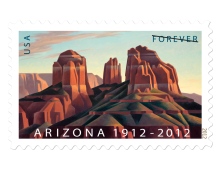
1. On the Deer stamped card, a fanciful graphic of a golden deer, surrounded by gold and green cattails and grasses, captures the graceful look of an animal that is found in many countries around the world. 2. With the 86-cent Tufted Puffins stamp, USPS celebrates the tufted puffin. The birds have adapted to an unusually broad range of ocean habitats, raising their young anywhere from southern California to arctic Alaska. 3. Each of the ten features a different, boldly-colored flora or fauna element emerging from a curling vine outline, and set against a teal blue background. 4. The Arizona Statehood stamp features the colorful and much admired sandstone rock formations of Sedona, Arizona. 5. USPS commemorated the 500th anniversary of the naming of Florida with the release earlier this year of the La Florida (Forever®) stamps, which celebrate the state’s floral abundance. A beautiful matching , envelopes, and stamps is also available.
Did we miss your favorite nature-inspired stamp? Tell us about it in the comments.